The Real Cost of Neglected Maintenance: What a Skipped Week Actually Costs
A buyer walks the show floor and sees a clean demo print. A seller names the maintenance schedule in reassuring language — automatic circulation, timed cleanings, humidity-controlled stations. What neither side names is the cost of the week that routine gets skipped. Neglected maintenance is not a cleaning problem. It is a compounding financial liability, and it is the single most underestimated line in the true cost of ownership.
Every DTF and DTG engine is built on the same unforgiving physics: white pigment settles when it sits, and settled pigment clogs the channels that lay it down. Skip the daily routine and the cost does not appear on day one. It appears when the nozzles that would have recovered with a five-minute agitation now require a full cleaning cycle — or a service call — or a printhead that a $4 cartridge of agitation would have saved.
Neglected maintenance is not a cleaning problem. It is a compounding financial liability that hides inside downtime, voided warranties, cascading parts, and jobs that walk while the printer is down.
The cost ladder: one skipped week, four escalating rungs
The danger of neglected maintenance is that it compounds. What starts as a missed agitation becomes a clogged channel; what starts as a clogged channel becomes a cleaning cycle that does not fully recover; what starts as a partial recovery becomes a service call. Each rung costs more in ink, parts, time, and reputation than the one below it — and every one of them was preventable with the daily routine a seller named in the demo and the shop never actually ran.
Rung 1 — Recovery ink and lost time
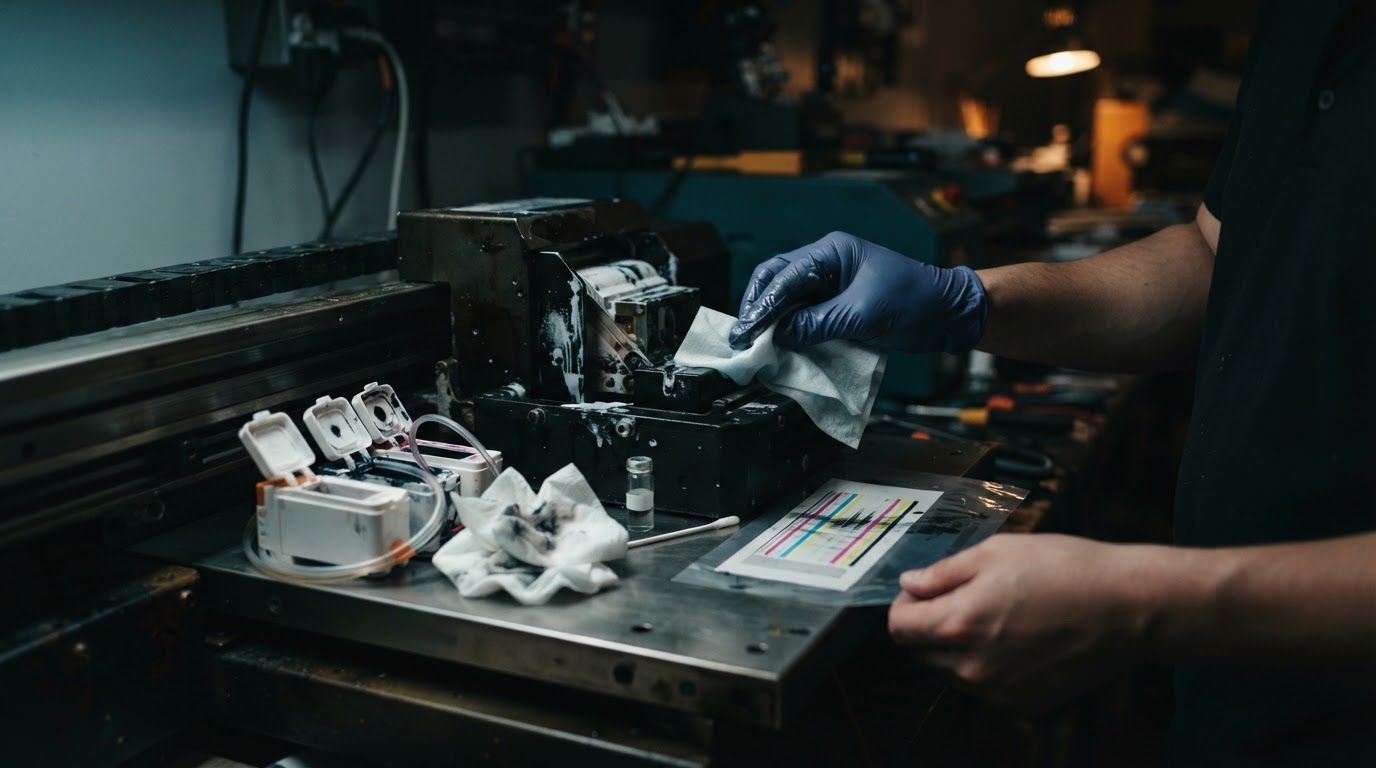
The first cost of a skipped week is the recovery itself. After several idle days, white ink separates and head channels dry. Recovery is a timed sequence of cleanings, primes, and test prints — and every step burns white ink the job never paid for. A recovery that a five-minute daily agitation would have prevented can consume a quarter of a cartridge and two hours of a technician's morning. The ink is visible. The two hours of production capacity lost to the recovery bench is not — and that is the cost that quietly compounds when neglect becomes routine.
Rung 2 — Wear parts consumed by the recovery, not the job
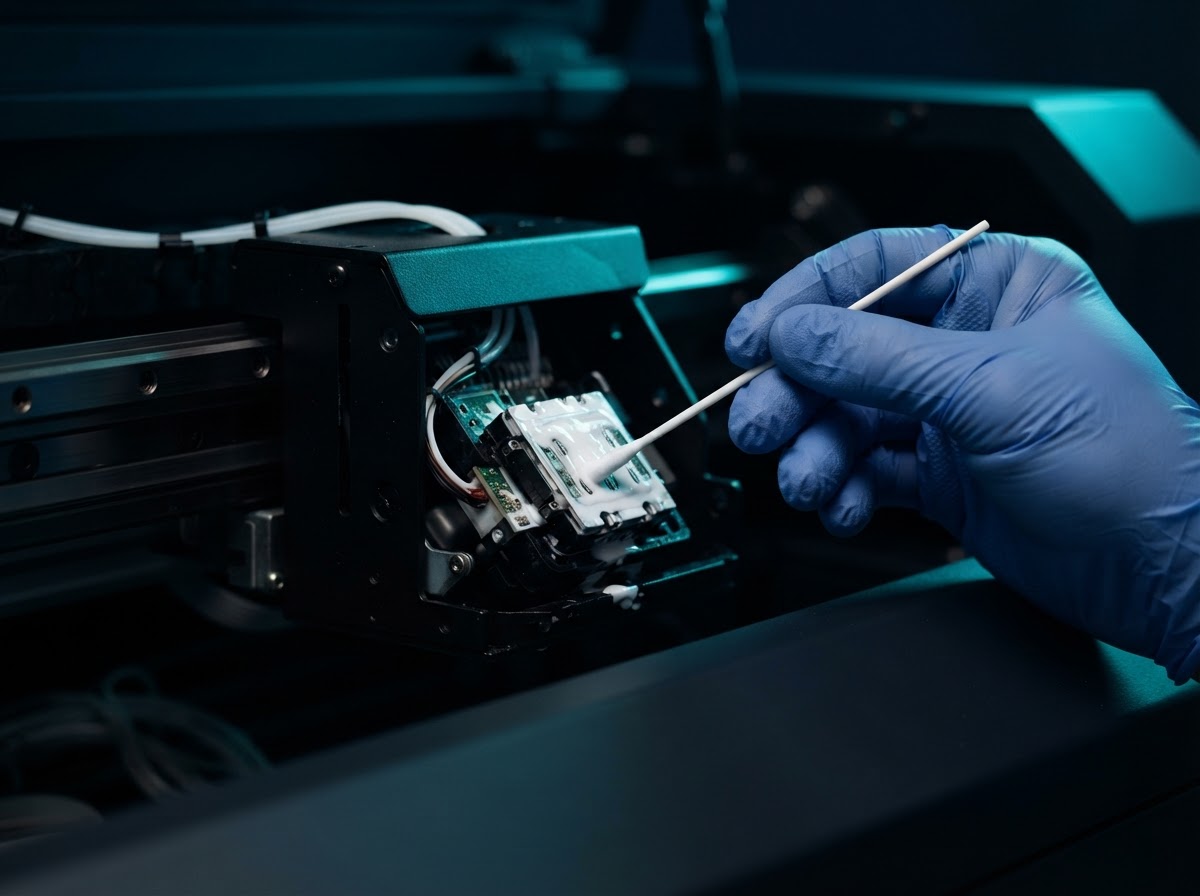
Recovery is not free on the machine either. The aggressive cleanings that clear settled pigment wear wipers, capping-station seals, and dampers faster than the daily routine ever does. A shop that skips maintenance and then runs hard recovery cycles is consuming its wear-parts budget on the recovery instead of on production. Wipers that should last a quarter fail in a month. Capping-station seals that should hold vacuum for clean nozzle checks start leaking. Each is a consumable, each has a cost per unit, and each is being burned by the recovery that the routine would have made unnecessary.
- Wipers — consumed by aggressive recovery cleanings, not the gentle daily wipe.
- Capping-station seals — vacuum loss from hardened ink crust that daily maintenance prevents.
- Dampers — clogged by settled pigment that agitation would have kept in suspension.
- Manual cleaning supplies — solvent, wipes, and labor that a five-minute routine eliminates.
Itemize the Recovery Cost Before It Happens
Use the Buyer's Reality Field Guide to map the ink, wear parts, and labor a single skipped week will consume — before you own the machine the routine protects.
Rung 3 — Printhead replacement
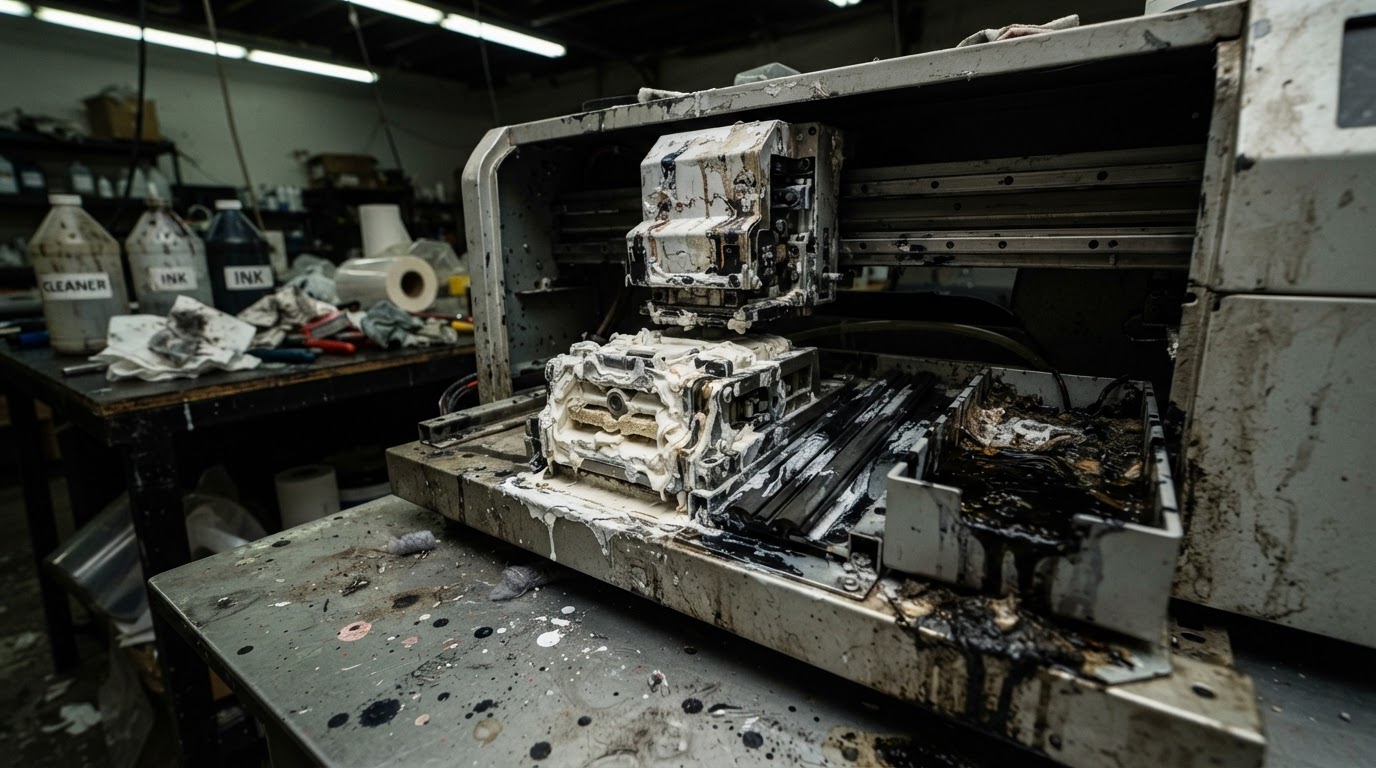
This is where neglected maintenance stops being a consumables problem and becomes a capital one. A white-ink channel that settles past recovery is a clog that cleaning cycles cannot clear. At that point the path is a manual flush, a service call, or the printhead itself — and a printhead is the most expensive single component on the machine. For a DTG engine laying white directly onto dark garments, a failed white channel can mean a full head replacement that costs a meaningful fraction of the printer's purchase price. The cartridge of agitation that would have prevented it costs less than lunch.
The printhead is the most expensive single component on the machine. The daily agitation that prevents a clogged white channel costs less than the lunch you skipped to run the recovery.
Rung 4 — Warranty denial and the evidence gap
The fourth rung is where the cost becomes existential. When a printhead fails prematurely, the first question from the manufacturer is not about the part — it is about the maintenance log. Did the shop agitate daily? Did it run nozzle checks? Did it log humidity? A seller who named the routine in the demo is now asking the buyer to prove the routine was actually run. Without documentation, the warranty claim becomes a negotiation, and the negotiation is one the unlogged shop always loses.
This is the gap that neglect opens: not just the cost of the part, but the cost of the part the warranty would have covered if the routine had been run and recorded. A documented daily maintenance log is the difference between a covered replacement and an out-of-pocket capital expense — and the absence of that log is the most expensive consequence of neglected maintenance, because it converts a recoverable failure into a total loss.
Your day is busy enough with running the business and keeping print production on schedule. Let WhiteGuard™ LITE automatically assist you with daily maintenance reminders and put valuable reference resources right at your fingertips.
Access WhiteGuard™ LITE Free Today
Start your daily maintenance streak, explore the full Reference Resources library, and protect your digital print hardware.
The cost that never appears in a quote — until it does
Every rung on this ladder was preventable with a five-minute daily routine. Every rung is also invisible in the purchase quote, because the quote prices the machine, not the routine that keeps it alive. The buyers who get burned are not the ones who ignored maintenance — they are the ones whose seller named a routine, named a schedule, and never named the cost of the week that routine got skipped. That cost is the gap between a machine that prints for five years and one that becomes a service liability in eighteen months.
- Ask the seller for the recovery procedure after three, five, and seven idle days — and the ink and time each consumes.
- Ask which wear parts the daily routine protects, and which the recovery cycle burns through faster.
- Ask the warranty terms: what maintenance documentation is required to keep coverage in force.
- Ask for the replacement cost of a single white-ink printhead, and the lead time to get one installed.
- Then ask the hardest question: what does the shop lose per day the printer is down for a preventable failure?
A seller who can answer all five in detail is selling a system whose cost of neglect is visible before you own it. A seller who can name the printhead price but not the recovery procedure is selling you a machine and a liability the routine would have prevented. The choice is not between maintenance and no maintenance — it is between the cheap, daily, documented routine and the expensive, cascading, undocumented cost of the week it gets skipped.
Seller Verification Workbook™
Put the maintenance schedule, recovery procedure, wear-part intervals, and warranty documentation requirements on the record — before the routine becomes a liability you pay for.
Pair the Workbook With WhiteGuard™ Documentation
Verify the routine before you buy with the Workbook, then protect the warranty you paid for with WhiteGuard™ LITE's daily evidence trail.
Get buyer-first guidance in your inbox
New field notes on DTF, DTG & UV ownership — no hype, no rankings.