White Ink: The Ownership Cost That Surprises Buyers
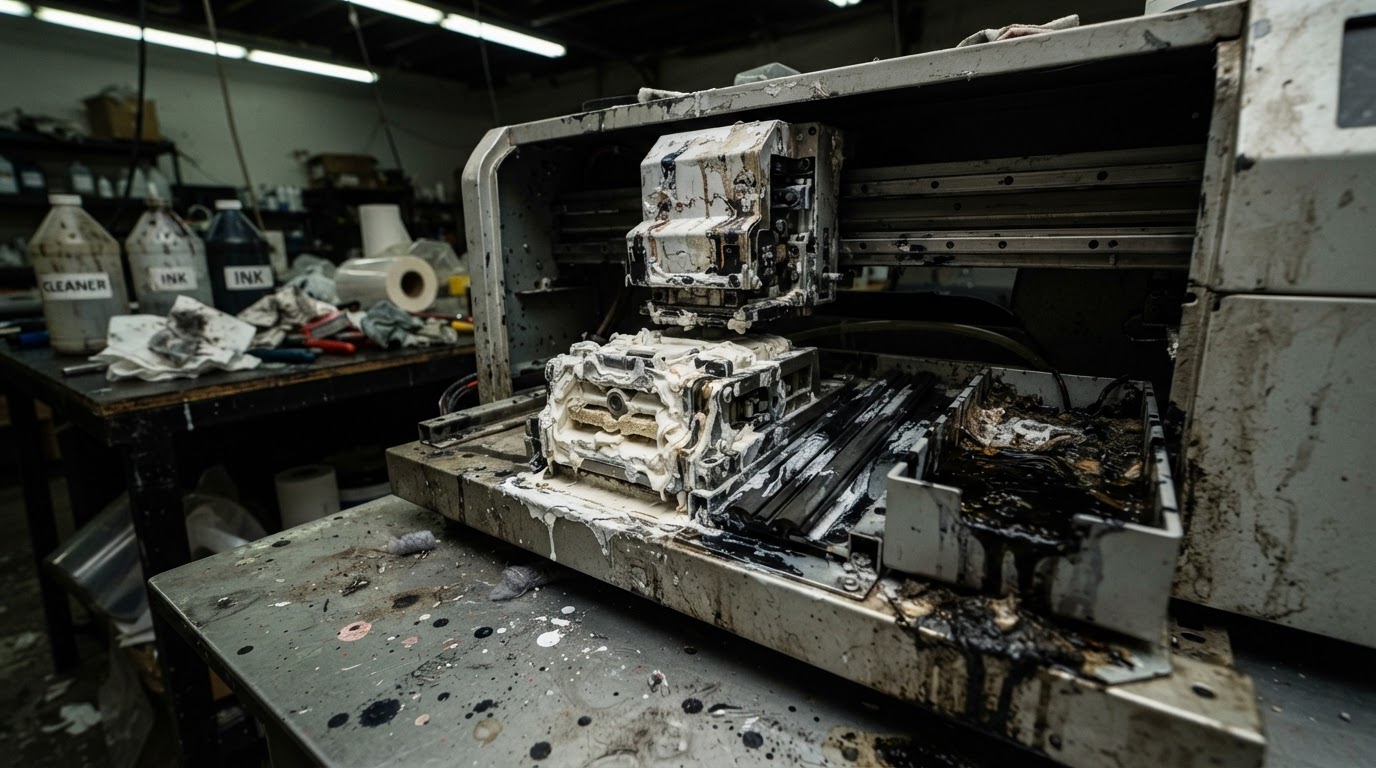
Ask a seller what white ink costs and you will get a price per cartridge. That is the wrong number. The number that matters is what white ink costs your business every week it sits in the printer — the ink burned by maintenance cycles, the cartridges that expire before they empty, the parts that wear from the routine that keeps the heads alive, and the hours of labor that no quote ever itemizes. White ink is the ownership cost that surprises buyers because it is the one cost the sales floor is built to hide.
The cost that never appears in a quote
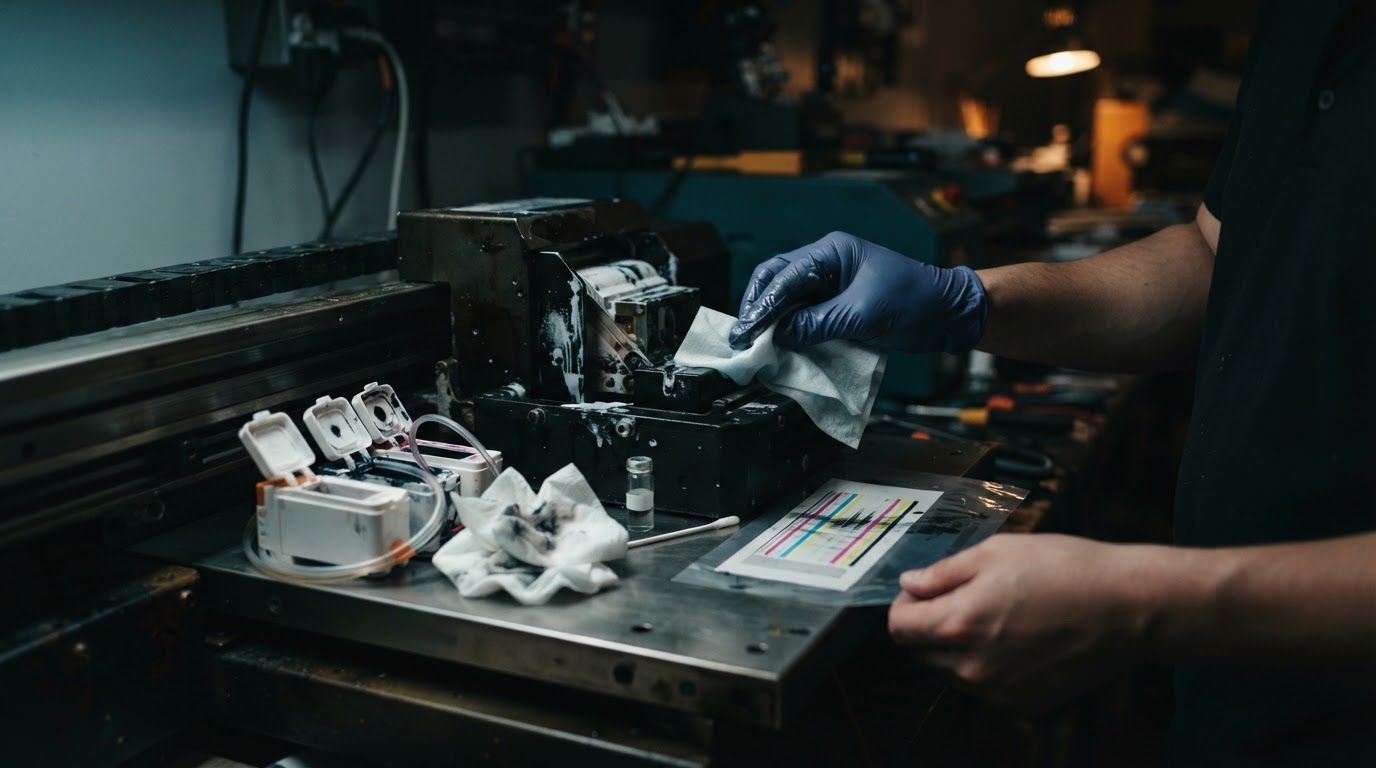
A quote lists the printer, the ink set, the film, the powder, and the warranty. It does not list the nozzle-check prints you run every morning before a single paying job. It does not list the cleaning cycles that fire automatically through the night and consume ink to keep channels from drying. It does not list the white cartridge you agitate, test, and eventually replace because it separated over a slow weekend. Every one of those is a real, recurring cost — and white ink is where they concentrate, because white pigment settles faster than any color.
White ink is not a consumable you buy. It is an operating obligation you accept — daily, weekly, and every time the printer sits idle. The quote prices the cartridge. Ownership prices the routine.
Size Your True Cost of Ownership
Use the Buyer's Reality Field Guide to itemize the recurring white-ink burden — maintenance ink, expired stock, replacement parts, and labor — before you compare a single printer.
What white ink actually consumes
- Maintenance-cycle ink — automated overnight cleanings and timed circulations draw white ink every idle hour to keep nozzles open. Over a month, that draw can exceed what you print.
- Expired and settled stock — white ink separates on a clock that does not pause for your weekends. A cartridge opened but not cycled can settle past usable before it empties.
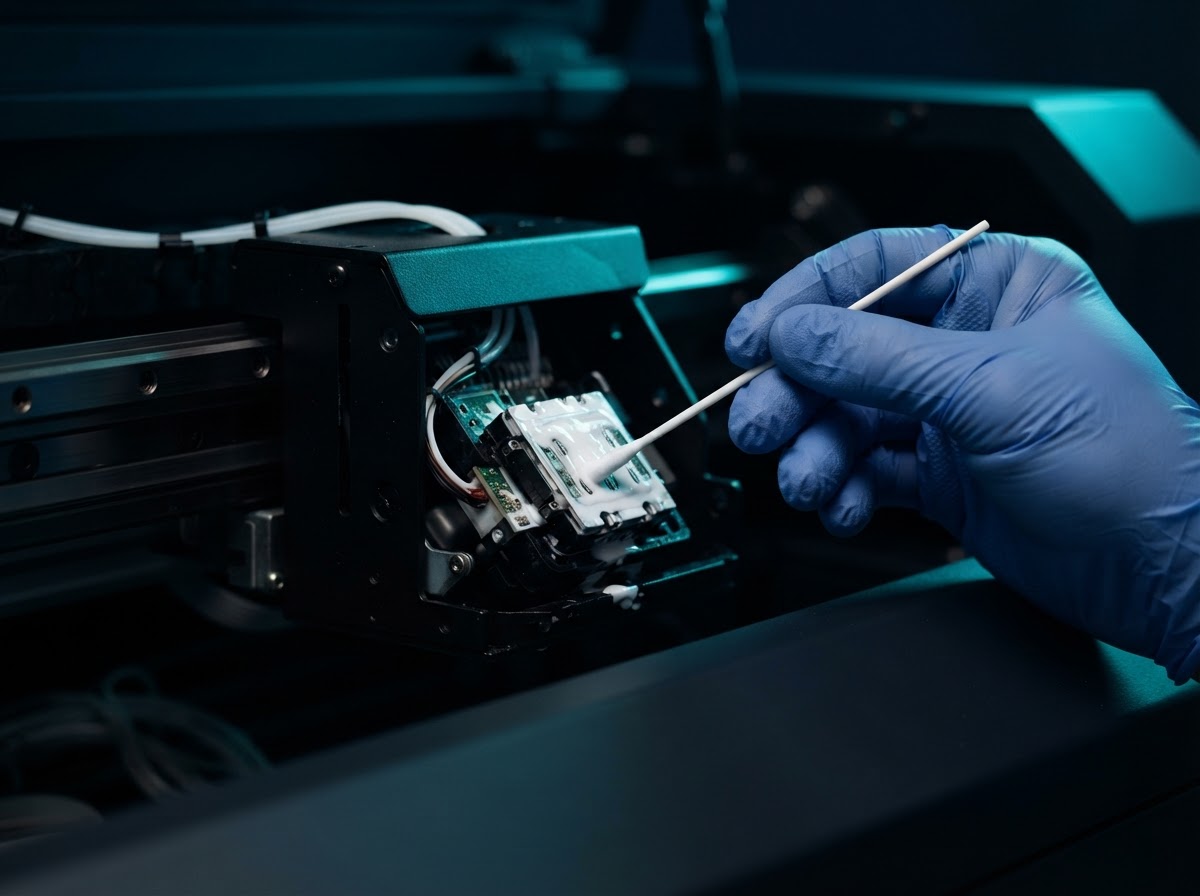
- Replacement wear parts — wipers, caps, dampers, and capping-station seals wear from the daily routine that keeps white channels clear. They are consumables, not one-time installs.
- Idle-time recovery ink — after several days down, recovery is a timed sequence of cleanings, primes, and test prints. Each step burns white ink you did not budget for the job.
- Labor hours — the daily check, the weekly manual clean, the agitation, the recovery. None of it appears in a consumables spreadsheet, and all of it is someone's time.
Add those five together and the price-per-cartridge number starts to look like a down payment. The buyers who get burned are not the ones who ignored maintenance — they are the ones whose seller quoted the cartridge and never mentioned the routine that drains it. The surprise is not the ink. It is everything the ink requires.
DTF vs. DTG: where white ink bites harder
White ink is a shared burden across DTF and DTG, but it does not bite equally. In DTF, white ink lays down as the base on film before powder and cure — the maintenance burden is real, but the print is forgiving because the film mediates the transfer. In DTG, white ink prints directly onto pretreated fabric as the underbase for dark garments, and the heads that lay it down are the same heads that sit in direct contact with lint, pretreatment residue, and fiber. The maintenance stakes are higher, the settling risk is constant, and the recovery from a clogged white channel can mean a full head flush or a service call that costs more than the ink you were trying to save.
If your work is apparel-centric and dark-garment-heavy, DTG white-ink maintenance is not a side cost. It is a core operating cost — and it is the one most likely to surprise a buyer who compared printers on the print instead of the routine.
How to size your white-ink burden before you buy
- Ask the seller for the automated maintenance schedule: how many cleaning cycles fire per idle hour, and how much white ink each draws.
- Ask for the white-ink shelf life once opened — and what happens to a cartridge that sits through a slow week.
- Ask which wear parts the daily routine consumes, their replacement interval, and their cost per unit.
- Ask for the full idle-recovery procedure after three, five, and seven days down — and the ink and time each stage consumes.
- Then map it against your actual demand: how many idle weeks will you have, and what does the routine cost across them?
A seller who can answer all five in detail is selling you a system you can budget for. A seller who can name the cartridge price but not the maintenance draw is selling you a machine and a number that will not hold. Make the seller document the routine, and the white-ink surprise stops being a surprise — it becomes a line item you planned for before the check cleared.
Seller Verification Workbook™
Make sellers put the white-ink maintenance schedule, shelf life, wear-part intervals, and idle-recovery cost on the record — before you commit.
Your day is busy enough with running the business and keeping print production on schedule. Let WhiteGuard™ LITE automatically assist you with daily maintenance reminders and put valuable reference resources right at your fingertips.
Access WhiteGuard™ LITE Free Today
Start your daily maintenance streak, explore the full Reference Resources library, and protect your digital print hardware.
Take All Three Tools to the Show Floor
Pair the Field Guide and Workbook with the Readiness Assessment to measure whether your demand can carry the white-ink routine before you buy.
Get buyer-first guidance in your inbox
New field notes on DTF, DTG & UV ownership — no hype, no rankings.