Workspace & Air: What This Equipment Puts Into Your Shop

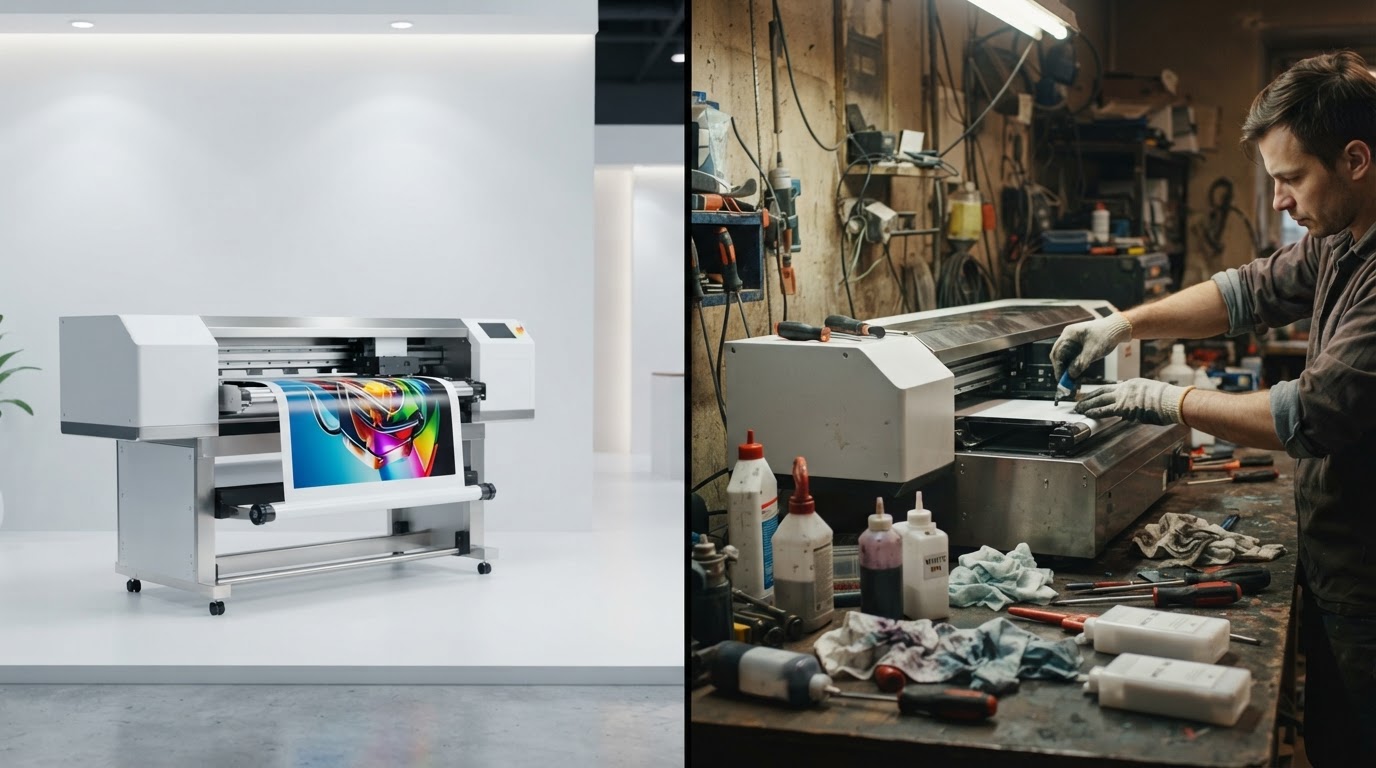
Before the printer arrives, the room has to be ready. Ventilation, filtration, temperature, humidity, electrical capacity, and working footprint are all pre-purchase decisions — and they apply across DTF, DTG, and UV, each in a different way.
What each technology puts into the air
- DTF: airborne powder from the shaker and fumes from the curing oven — enclosure and filtration matter most here.
- DTG: lower powder burden, but pre-treatment spray and curing emissions still want ventilation.
- UV: UV-cured inks release odor and some VOCs; LED lamps are cooler but local extraction is still recommended.
Ask the seller: what ventilation, filtration, temperature, humidity, and electrical requirements should I plan for before installing this in a home, garage, or small shop?
Plan the room before the quote
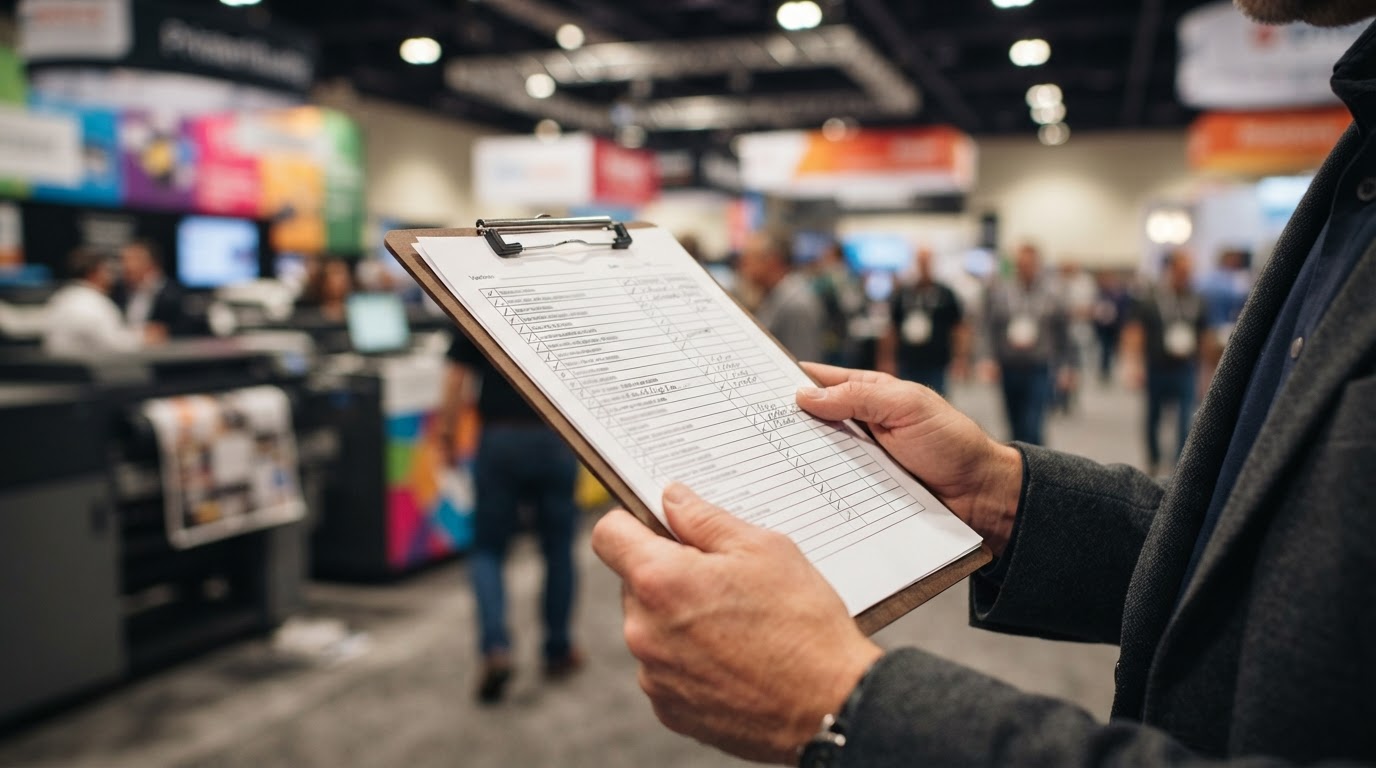
Get the environmental spec sheet in writing: recommended temperature and humidity ranges, required clearance for service, amperage and circuit needs, and any filtration or exhaust the seller recommends. Then compare that against the room you actually have. A printer that fits your budget but not your air handling is a future problem, not a saved cost.
Assess Your Workspace and Production Readiness
Use the HopeDez readiness evaluation to audit your power, ventilation, and daily operational footprint.
Get buyer-first guidance in your inbox
New field notes on DTF, DTG & UV ownership — no hype, no rankings.